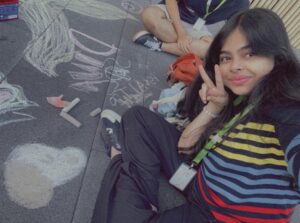
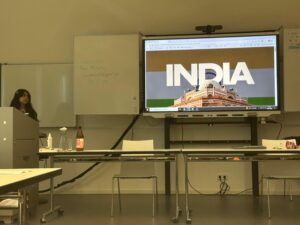
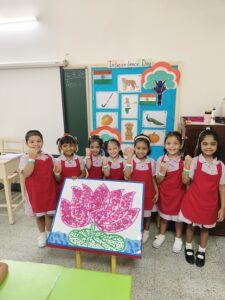
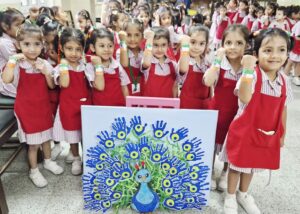
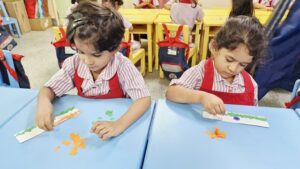
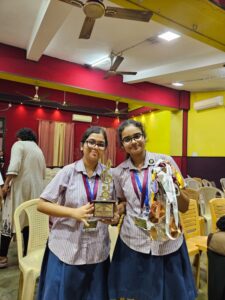
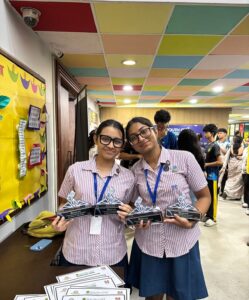
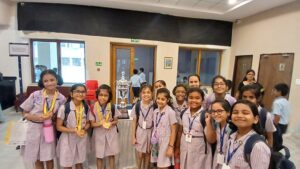
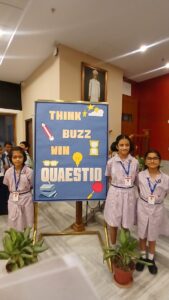
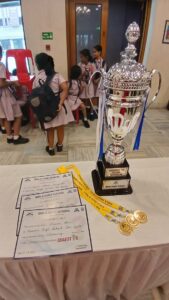
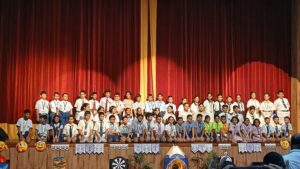
Quiz on the Textiles of India
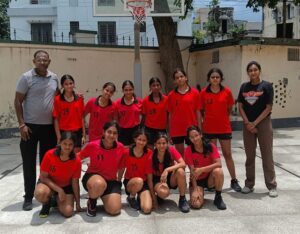
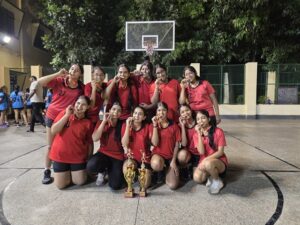
CISCE ZONAL THROWBALL TOURNAMENT 2026
Inter-House Badminton Competition (Classes 9 to 12)
Inter House Badminton Competition (Classes 6 to 8)
CISCE Zonal Swimming Competition 2026 – Zone G

Quantum Qubit 2026
Class 2 Brings The Jungle Book to Life!
The students of Class 2 stepped into the enchanting world of Rudyard Kipling’s The Jungle Book through an engaging Environmental Studies and Literature activity.
Wearing colourful character masks, the children enthusiastically brought the story to life as Baloo the bear, Bagheera and the panther family, the wise python Kaa, Shere Khan and his family, Mowgli and a host of lively jungle creatures.
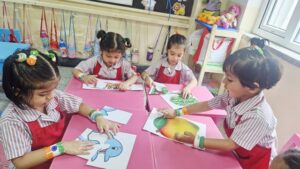
The dramatisation was followed by a creative poster-making session that reinforced important environmental messages. Through their artwork, the students highlighted the significance of conserving our majestic national animal, spread awareness about endangered species, advocated against poaching, and encouraged everyone to plant more trees. They also learnt about International Tiger Day, observed on 29 July, and its importance in promoting tiger conservation.
It was a joyful day where imagination, creativity and meaningful learning came together, inspiring the children to appreciate and protect the wonders of the natural world.

Mrs Ranjana Roy – Teacher, Assistant to the Head Mistress – 1952 to 1992

Tributes by
Ms Nalini Sicka
Thinking about Mrs R Roy,
It was there that Mrs. R. Roy became our teacher. She taught us Bengali in Classes III and IV, and I have known her ever since. It would be no exaggeration to say that she—and indeed all the wonderful Bengali teachers who taught us at MHS—laid the foundation for our lifelong love of the language and its rich literature. They did far more than teach us grammar and poetry; they awakened in us an appreciation for the beauty, rhythm and soul of Bangla.
As children, we simply found Mrs. Roy delightful. Her voice was gentle, her manner warm, her interactions with students unfailingly gracious. There was a quiet elegance about her that left an impression on all of us. And, somehow, she always smelt of lavender. Even today, that fragrance instantly brings her back to me.
Her reprimands, too, reflected her nature. We were certainly scolded when we deserved it—but never harshly, never unkindly and never in a way that diminished us.
As we grew older, we discovered more about her—as school students invariably do, being remarkably efficient private investigators! We learnt that she was the youngest of the celebrated Das sisters, five extraordinary women who were all teachers at MHS. They were far more than members of the faculty; they were pillars of the institution. Together they represented scholarship, refinement, dignity and extraordinary efficiency. Looking back, I realise that many of life’s lessons were learnt simply by observing them.
Mrs. Roy accompanied us on our excursion to Delhi after the Bangladesh War, when we were in Class X—or perhaps XI. One unforgettable highlight of that trip was the opportunity to meet Mrs. Indira Gandhi. We had all been instructed to ask her questions, but standing before such a formidable personality, we were completely overwhelmed into silence. Mrs. Roy’s exasperated yet memorable rebuke still echoes in my ears: “Jokhon kotha bolar kotha noy, non-stop kotha bolo; ekhon kotha bolte bola holo—shobai chup?” (“When you’re not supposed to talk, you chatter non-stop. Now that you’ve been asked to speak—everyone is silent?”)
Life came full circle when some of us returned to MHS as teachers. By then, the second generation of the remarkable Das family—the daughters and daughters-in-law—had joined the school as colleagues and friends. Mrs. Roy had become “Tutu Mashi” to everyone. She was Assistant to the Headmistress, with her office downstairs, and many of us would report to her with our corrected examination scripts.
She never treated that responsibility as a mere administrative exercise. She actually took the time to read through our marking, appreciated thoughtful comments written for students, and invariably left her own observations in her unmistakable green ink. I still remember how encouraging it felt when she complimented the detailed remarks I had written on my students’ answer scripts. It was her quiet way of mentoring us, even when we ourselves had become teachers.
Mrs. Roy was, in every sense of the word, an institution. She belonged to that extraordinary generation of educators whose influence extended far beyond the classroom. They shaped minds, nurtured values and set standards that continue to guide us decades later.
Teachers like her are not merely remembered—they become part of a school’s collective conscience. No one can ever truly replace Mrs. Roy, because some people do not simply serve an institution; they become inseparable from its very identity.
Blue and White Chess Competition